Key Takeaways
-
A pool cover is the most effective way to reduce heat loss and lower heating costs.
-
Most pool heat loss happens through evaporation, especially on cool, windy nights.
-
Reducing evaporation can improve heater performance and cut heating energy use by 50–70% with consistent cover use.
-
Covers help any heater type, but they pair especially well with heat pumps because they reduce overnight recovery time.
-
The best cover for heating is the one you’ll actually use consistently.
Heating your pool isn’t just about the heater. It’s about how well your pool holds onto the heat you’re paying for. Even a high-performance pool heat pump can struggle if the pool is losing warmth every night through evaporation and wind-driven cooling.
In this guide, we’ll break down why a pool cover improves heating results more than most equipment upgrades, and how to use one to get faster warm-ups, steadier temperatures, and lower energy costs.
Why Most Pools Lose Heat Faster Than Heaters Can Replace It
Most pool owners assume better heating means buying a bigger heat pump. But if your pool is uncovered, even the best pool heater is fighting a losing battle.
Here’s why: evaporation is the single biggest source of heat loss in a pool. When warm water evaporates off the surface, it carries a massive amount of heat away with it. In fact, it only takes 1 BTU to warm a pound of water by 1°F. But one pound of water evaporating pulls about 1,048 BTU out of your pool. That’s why uncovered pools cool so quickly, especially on windy, dry nights.
A cover doesn’t just help a little. Covering your pool when it’s not in use is the most effective way to improve heater performance and reduce heating costs, with many energy-efficiency sources estimating 50–70% possible savings from consistent cover use.
So if you want faster heating, lower bills, and a longer swim season, the best upgrade isn’t another heater. It’s a cover.
Your Heater Isn’t the Bottleneck, Heat Loss Is
When pool owners think about better heating, the first instinct is usually to look at the heater itself. Bigger BTU ratings, higher output, or a different heater type all sound like the direct path to faster warming.
Heater size and quality do matter, but in everyday use the main limit on heating performance is often something else: how quickly your pool is losing heat.
A pool can only warm up and stay warm if the heat going in is greater than the heat going out. If heat is escaping quickly, even a strong heater has to run longer and work harder just to keep up. That leads to slower warm-up times, higher energy use, and bigger temperature swings.
This is why two pools with the same heater can perform very differently. The difference is usually not the heater, it’s the rate of heat loss from the water.
Before upgrading to a larger heater, it helps to address the simplest improvement that benefits every heating system: reducing heat loss at the surface.
Evaporation: The Biggest Loss Pool Owners Ignore
Outdoor pools lose heat in several ways, including through the surrounding air, wind, and the pool structure. However, the largest single source of heat loss is evaporation from the water surface.
Evaporation happens when water molecules at the surface turn into vapor and rise into the air. That phase change requires energy, and the energy comes directly from the pool water. As a result, every bit of evaporated water carries heat away with it.
A helpful comparison shows why evaporation is so powerful:
-
Raising the temperature of 1 pound of water by 1°F requires about 1 BTU of energy.
-
Evaporating 1 pound of water removes about 1,048 BTU from the pool.
This means a small amount of evaporation can undo a very large amount of heating.
Conditions that increase evaporation include wind, low humidity, and cooler nighttime air. This is why pools often lose most of their temperature after sunset, and why windy days can noticeably reduce heating performance.
A pool cover works by limiting evaporation. When evaporation slows down, heat stays in the water longer, and that is the foundation of why covers are such an effective heating upgrade.
What a Cover Does (3 Main Benefits)
A pool cover improves heating performance by reducing heat loss at the surface. It doesn’t add heat on its own. Instead, it helps your heater keep more of the heat it already produces.
A good cover supports heating in three main ways:
1) It slows evaporation
Since evaporation is the largest source of heat loss, reducing it has the biggest impact. Solid covers can reduce evaporation by more than 90% under typical conditions.
2) It limits wind-driven cooling
Wind moving across the pool surface increases evaporation and strips away warm surface water. A cover blocks that air movement and creates a more stable boundary layer above the water, which helps retain heat.
3) It reduces overnight temperature drop
Most pools lose a significant portion of their daily heat after sunset when air temperatures fall and evaporation continues. Covering the pool at night keeps those losses small, so the water starts the next day closer to your target temperature.
Because these losses affect every heater type, a cover improves performance whether you use a heat pump, gas heater, or no heater at all.
Covers + Heat Pumps = The Best Pairing
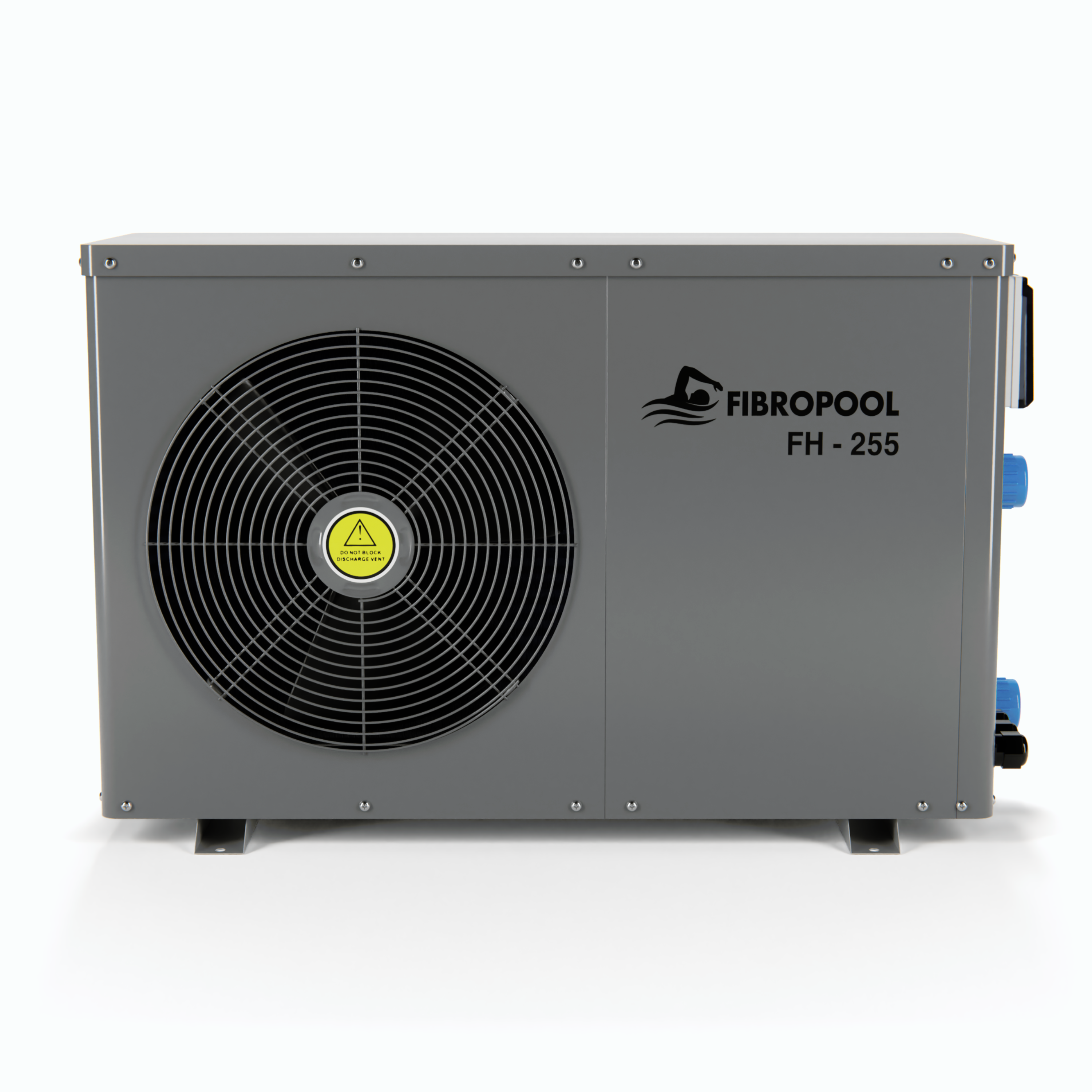
Heat pumps are designed to work most efficiently when they are maintaining temperature. They can heat cold water, but their strongest advantage is steady, efficient holding once the pool is warm.
Without a cover, a pool typically loses heat quickly overnight. The heat pump then spends much of the next day recovering that lost temperature. This leads to longer runtimes and higher energy use.
With a cover, overnight losses are much smaller. That changes how the heat pump operates:
-
The pool stays closer to the set temperature
-
The heat pump cycles less aggressively
-
Less total energy is required to stay warm
-
Real-world efficiency improves because the system isn’t constantly reheating from cold
In practical terms, a cover makes a correctly sized heat pump feel more powerful than it would on an uncovered pool.
If you’re deciding between equipment types, see: Inverter Heat Pump vs Traditional Heat Pump: Key Differences.
If you’re optimizing your setup, properly sized plumbing components can also help your system run smoothly. Browse our valves and fittings for common connection and flow-control parts.
Which Cover Type Is Best for Heating?
Not all covers perform the same way, but almost any physical cover will improve heating because it blocks evaporation. The best option depends on how you use your pool and how much convenience matters.
Solar blankets (bubble covers) for daily, in-season use
Solar blankets float directly on the water surface. Their main heating benefit is evaporation control, and many can reduce evaporation by around 90% or more when used consistently.
They also provide some daytime solar gain by letting sunlight in and trapping heat near the surface. In practical terms, this often means faster warm-ups and smaller temperature drops at night.
Automatic safety covers and solid safety covers
These covers create a tight barrier across the pool. They are among the best performers for heat retention because they strongly limit evaporation and wind effects.
Their biggest advantage is convenience. Pools that are easy to cover tend to stay covered more often, and consistent use is what drives savings.
Liquid solar covers (supplemental option)
Liquid covers form a thin, invisible surface layer that can reduce evaporation somewhat, but they do not block wind or insulate the surface like a physical cover. They can be useful when a traditional cover is impractical, but they should be viewed as a partial solution rather than a replacement for a real cover.
The key idea is simple: for heating performance, the best cover is the one you will actually use every day.
How to Use a Cover for Maximum Performance
Covers only help when they are on the pool. Small habit changes make a large difference.
-
Cover the pool whenever it’s not being used. Heat loss continues all day and all night.
-
Prioritize nighttime coverage. Most pools lose their largest share of heat after sunset.
-
Make sure the cover fits the surface area. Gaps allow evaporation to continue.
-
Use a reel if you have a solar blanket. The easier it is to use, the more likely you’ll be consistent.
-
Store solar blankets out of direct sun when off the pool. UV exposure shortens cover life the fastest.
What Difference Can You Expect?
A cover improves heating performance because it reduces energy waste at the pool surface. The impact is not subtle.
Multiple energy and water efficiency sources estimate that, for heated pools, consistent cover use can save roughly 50–70% of heating energy by reducing evaporation.
In simple terms, that usually shows up as:
-
Faster warm-up to your target temperature
-
Smaller temperature drops overnight
-
Fewer total hours of heater runtime
-
Lower electricity or gas bills
-
A longer comfortable swimming season
Even if your heater stays the same size, a cover increases the amount of heat that stays in the pool, so the results feel like a heater upgrade.
If you’re still sizing equipment, see: How to Size a Heat Pump for Your Pool.
Final Thoughts
If your pool isn’t covered, your heater is spending much of its runtime replacing heat that escaped overnight, not moving you closer to your ideal swimming temperature. A cover reduces evaporation, limits wind-driven cooling, and keeps more heat in the water, which improves performance and lowers heating costs for every pool and every heater type.
If you’re using a heat pump (or shopping for one), our pool heat pump FAQs cover common questions about sizing, operating costs, and performance in different weather.
Pool Cover Frequently Asked Questions
Do you really need a pool cover?
You don’t need one, but a cover is one of the most effective ways to reduce heat loss, lower heating costs, and keep water temperature more stable. If you heat your pool regularly, a cover is usually one of the highest-impact upgrades you can make.
Will a pool get warmer with the cover on or off?
In most cases, a pool stays warmer with the cover on because it reduces evaporation and traps heat, especially overnight. In peak summer heat, leaving the cover off during the hottest part of the day can help prevent the water from getting too warm.
What is the life expectancy of a pool cover?
It depends on the type and how it’s used. Solar blankets often last around 1–3 seasons, while solid safety covers and automatic covers can last 7–15 years with proper care and storage.
Will a cover make my pool too warm in peak summer heat?
It can, especially with solar blankets in very hot weather. If the water starts climbing above your comfort range, remove the cover during the hottest part of the day and replace it at night.
Do I still need a cover if I bought a large heater?
Yes. A larger heater can replace heat faster, but it can’t stop heat loss. A cover prevents that loss in the first place, which is always more efficient.
Is a cover worth it for above-ground pools too?
Yes. Above-ground pools often cool faster because more of their structure is exposed to air, and evaporation is still the biggest source of heat loss.
What if my pool shape makes a cover annoying to use?
A fitted solar blanket or segmented cover system often solves this. If physical covers are truly impractical, a liquid cover can still provide partial evaporation reduction.